07 · Oct 2025
Microsoft: SCAD Flow
Reimagining a university ecosystem through AI, for a Microsoft sponsored case study, in 24 hours.
- Sponsor
- Microsoft (Generate x SCAD)
- Role
- Design Lead
- Year
- October 2025
- Disciplines
- UX Strategy, User Research, AI, Vibe Coding, Prototyping
Overview
SCAD Flow is a context aware AI assistant for art and design students, built for Generate, a Microsoft sponsored case study at SCAD. From idea capture through deadline, it tracks the time, the effort, and the intent behind creative work, and shows students what their output is actually worth.
The project came out of Generate, a 24 hour case study sponsored by Microsoft at SCAD. The full cohort was 25 plus creatives. SCAD Flow itself was built by a focused 5 person team I led as Design Lead, embedded with a Microsoft engineering technologist who shaped the AI architecture alongside us from hour one.
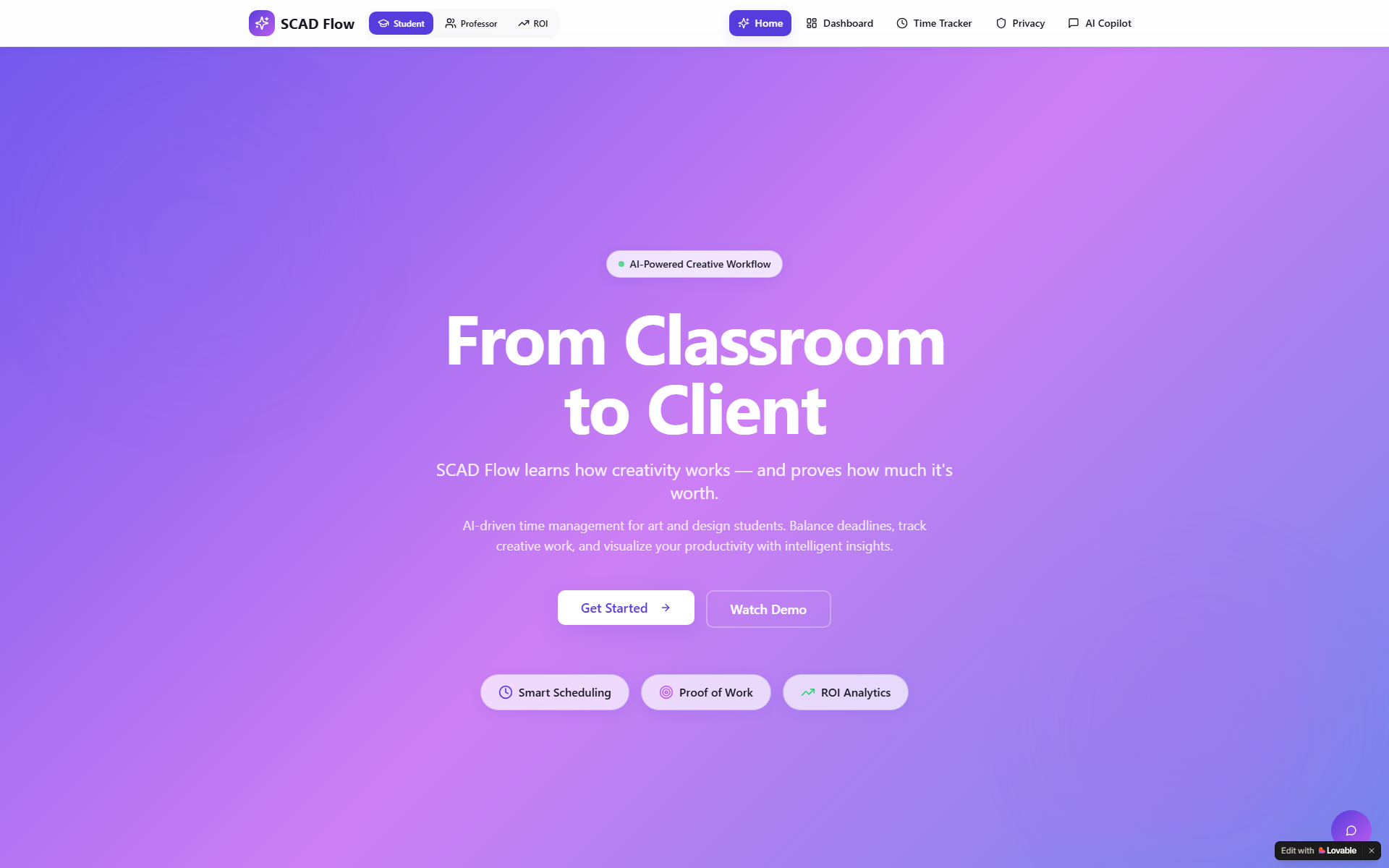
From classroom to client, with proof.
The brief from Microsoft and SCAD asked a deceptively simple question. If AI is going to live inside the way creative students work, what would it actually do for them? Not a chatbot tacked onto a portal. A tool that fits the rhythm of how design students plan, build, hand off, and get paid for what they make, built to the same bar Microsoft holds its own product teams to.
The team landed on three jobs to be done. Smart Scheduling to keep deadlines visible. Proof of Work to show the time and intent behind a deliverable. ROI Analytics to translate creative output into language that classrooms and clients both understand.
Five creatives. One Microsoft engineer. Twenty four hours.
The larger Generate cohort was 25 plus creatives split across competing concepts. SCAD Flow was the team I led. Five people, cross functional by design. A marketing lead, designers, a finance perspective, and a technologist, embedded with a Microsoft engineering technologist who held the AI architecture for us and worked shoulder to shoulder with the design side of the table.
The constraint shaped the work. Twenty four hours forced clarity. There was no time for hedging. We had to decide, build, and ship a story by sunrise. As Design Lead, my job was the through line. Whose problem are we actually solving, what does a good answer look like by morning, and how do we get every discipline, including our Microsoft engineer, pulling in the same direction.
An embedded Microsoft engineer, not a sponsor logo on a slide.
Generate wasn't a case study run at arm's length from Microsoft. A Microsoft engineering technologist sat inside our team for the full 24 hours, shaping the AI architecture alongside the design decisions in real time. That meant the assistant we shipped wasn't a mockup of what AI might do, it was scoped and built the way Microsoft's own teams approach a real product problem.
It changed how we worked. Every design call had an engineering answer in the room, and every technical constraint got translated into the experience immediately, instead of surfacing weeks later in a hand-off meeting.
Research to prototype, on the same day.
We spent the first hours in user research with peer SCAD students, mapping where their day already breaks, where work goes uncounted, and where the institution loses visibility. From that we shaped a UX strategy around a single AI assistant that lives where the work already is, rather than another tab to remember to open.
From strategy we moved straight into high fidelity prototyping using vibe coding. A faster way to build than wireframes, closer to the actual feel of the product. By morning we had a working version of SCAD Flow with the core flows clickable.
A walk through the working prototype.
Six surfaces, one connected experience. Below, the core screens we shipped by sunrise.
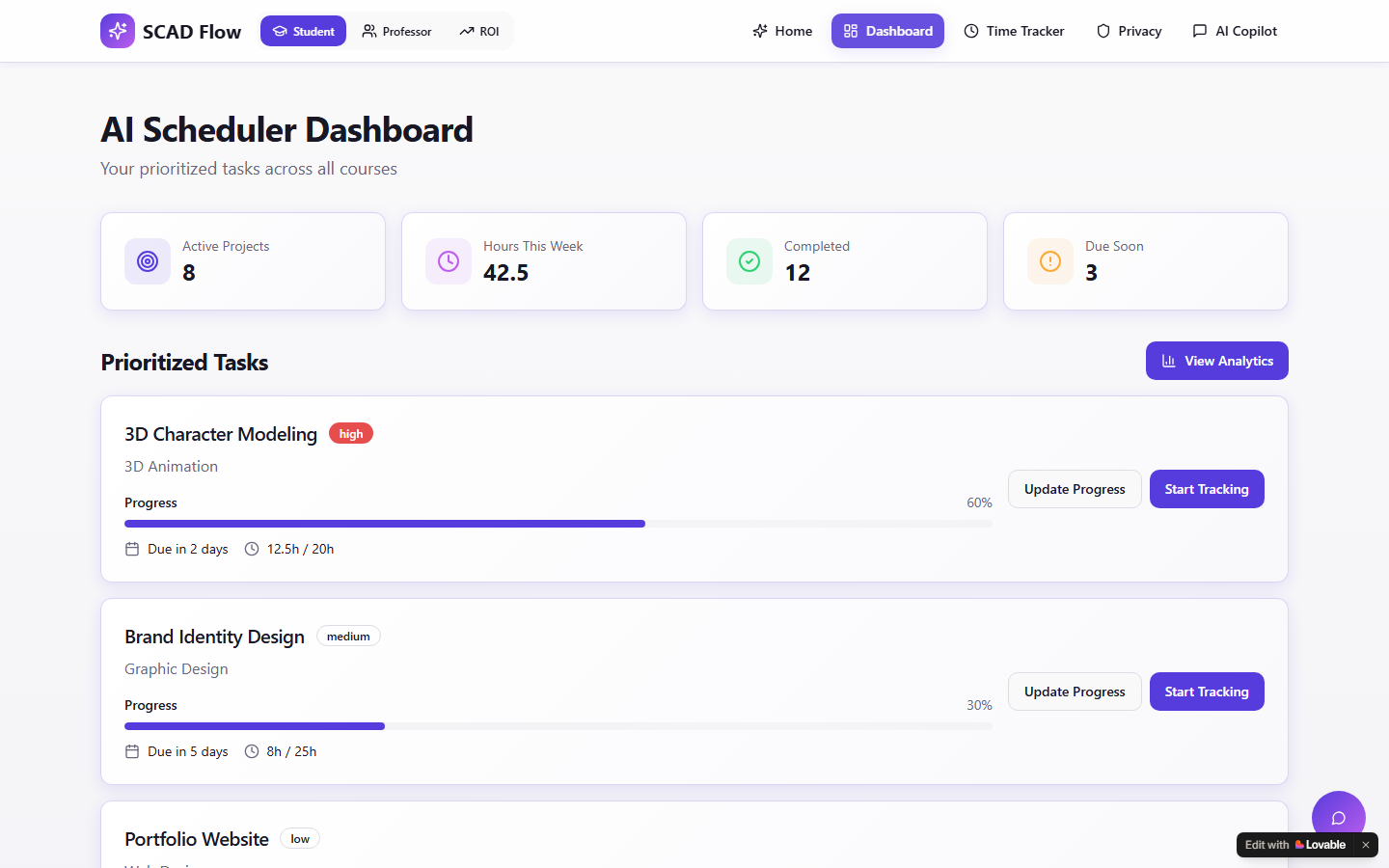
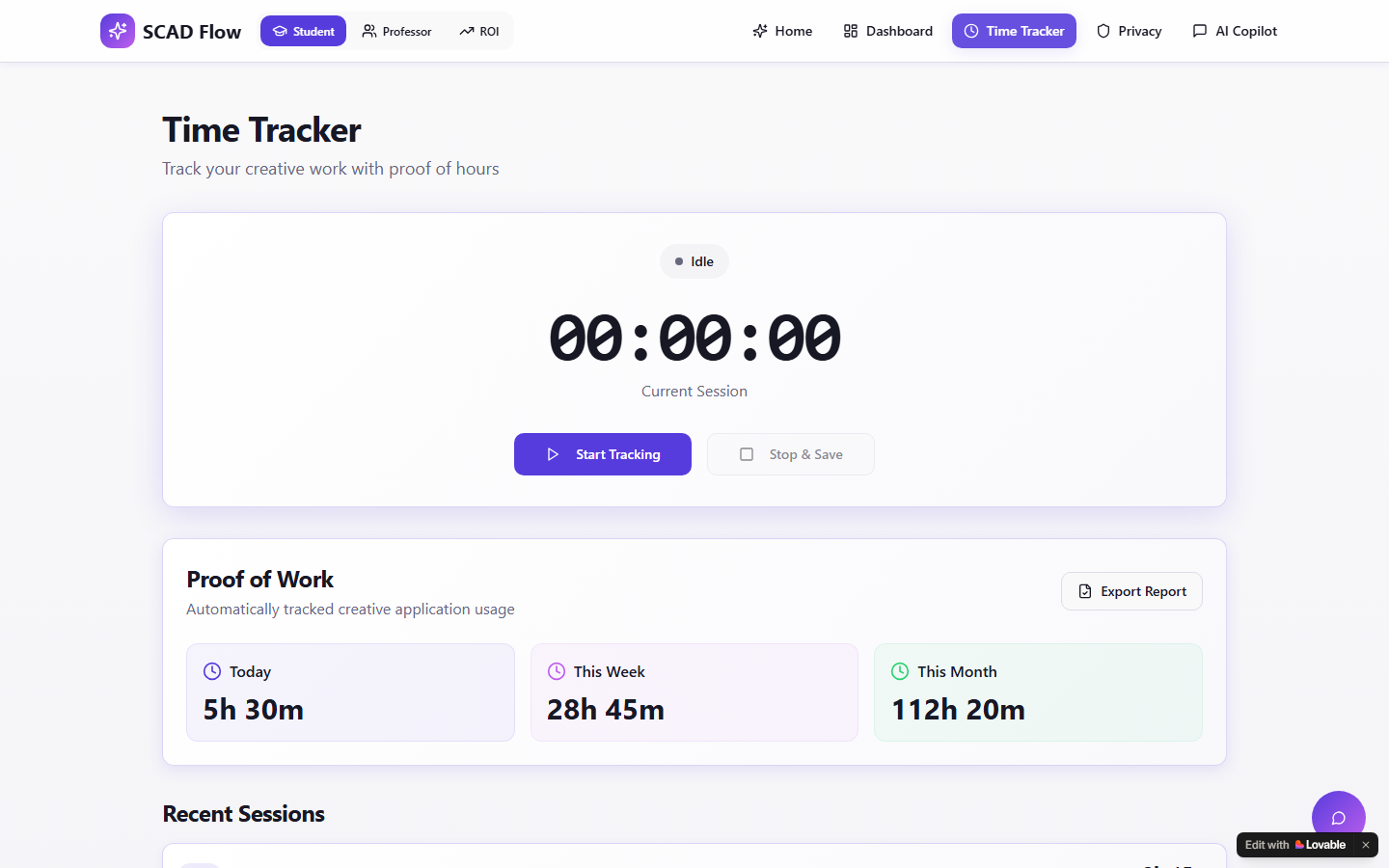
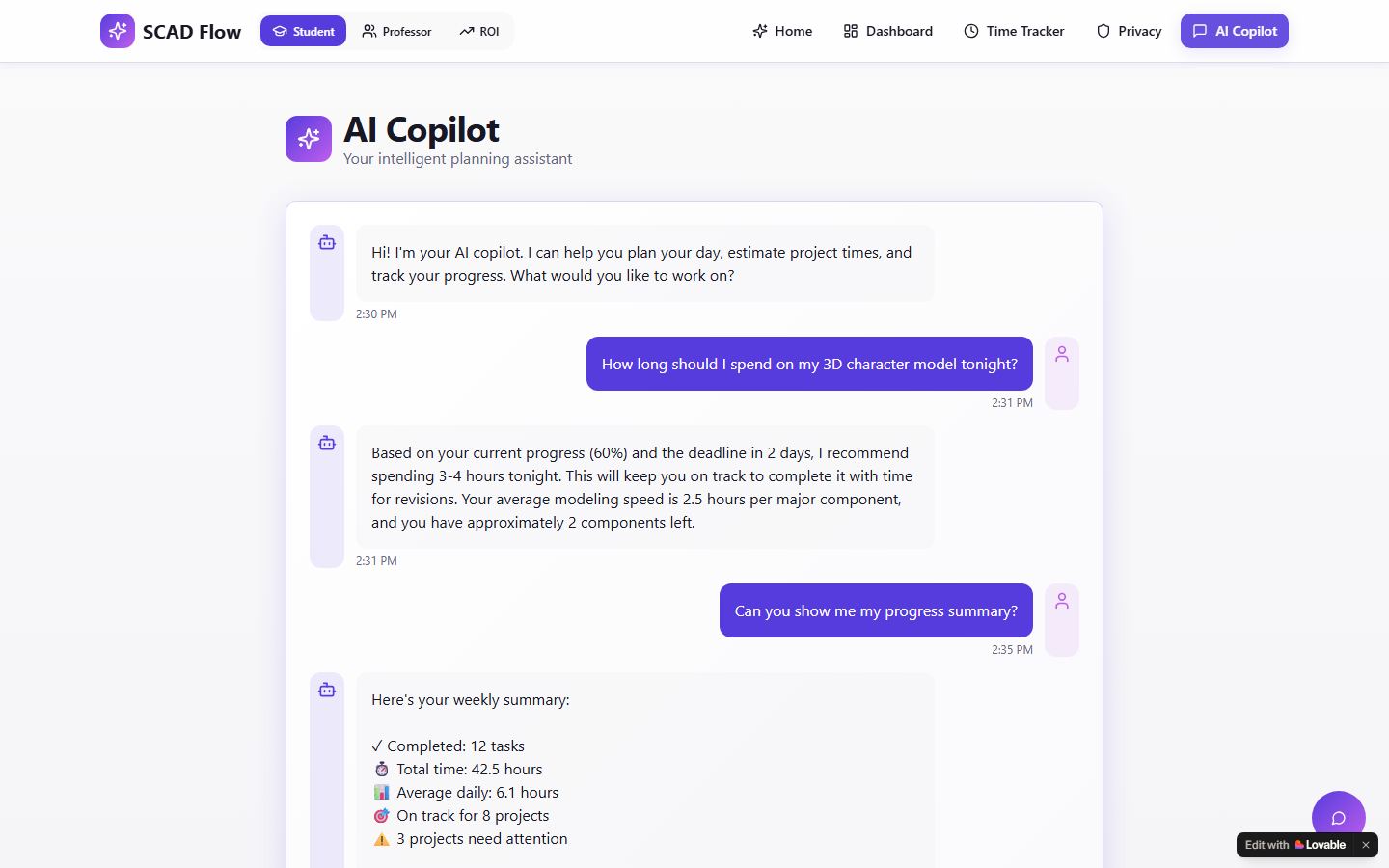
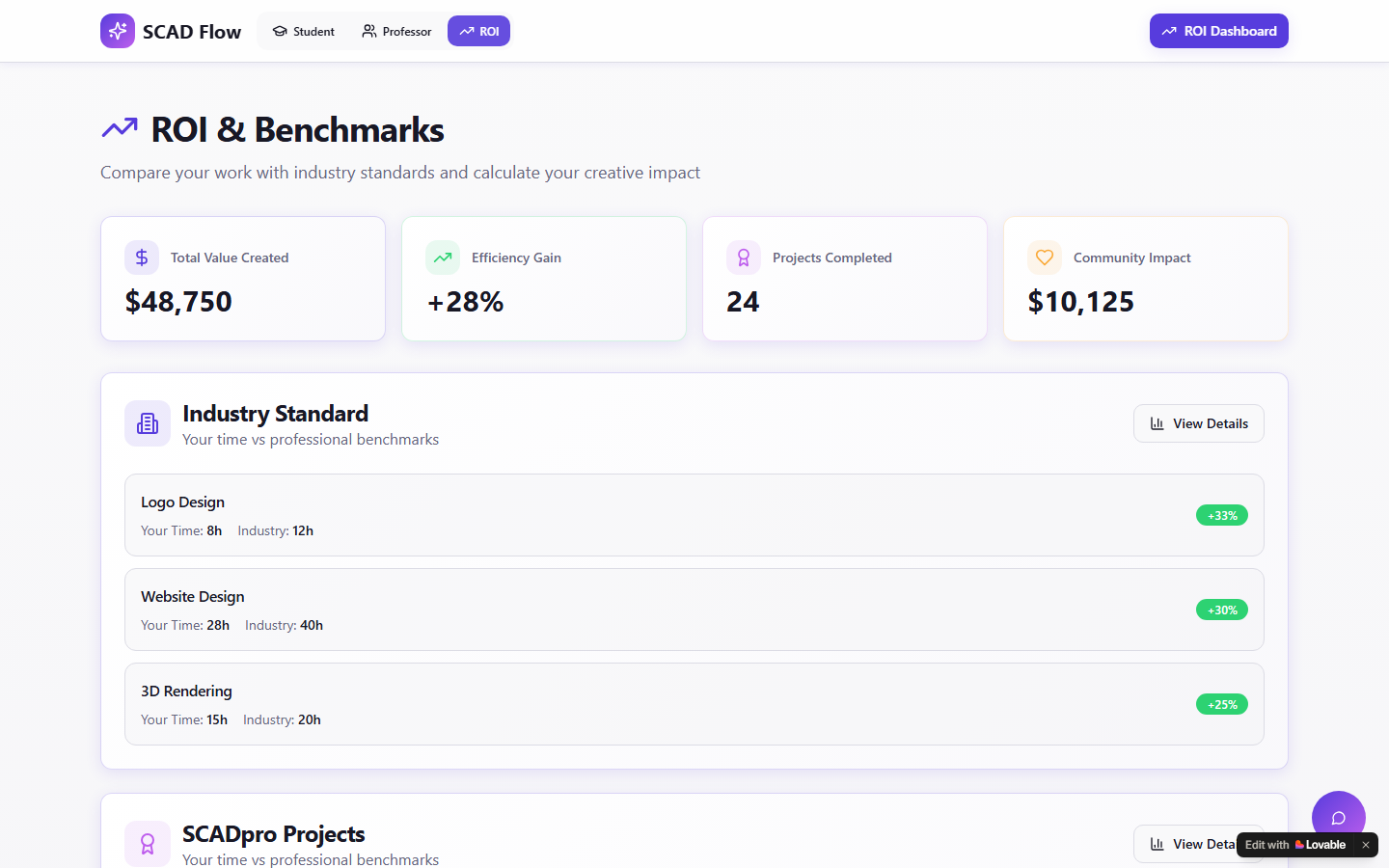
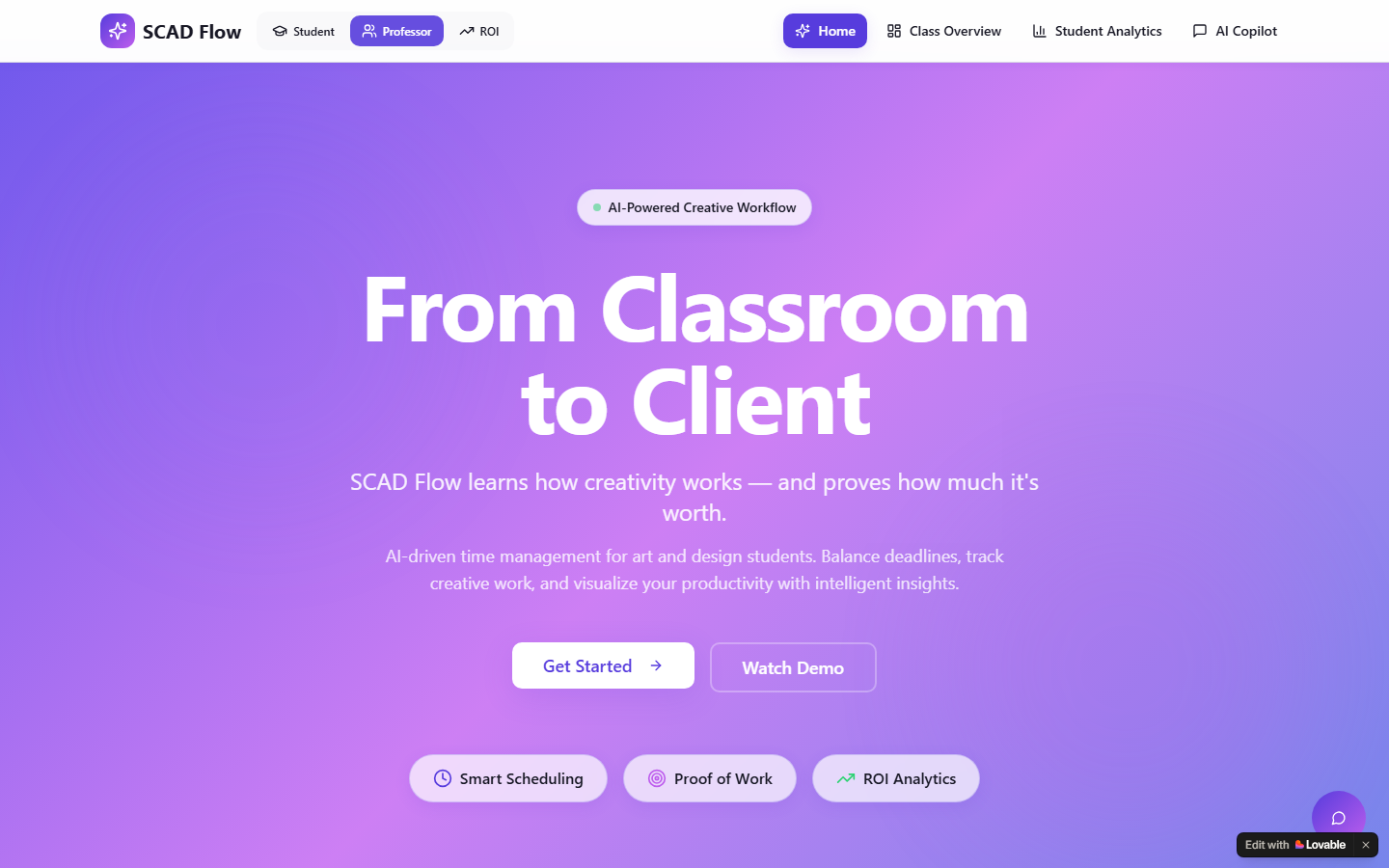
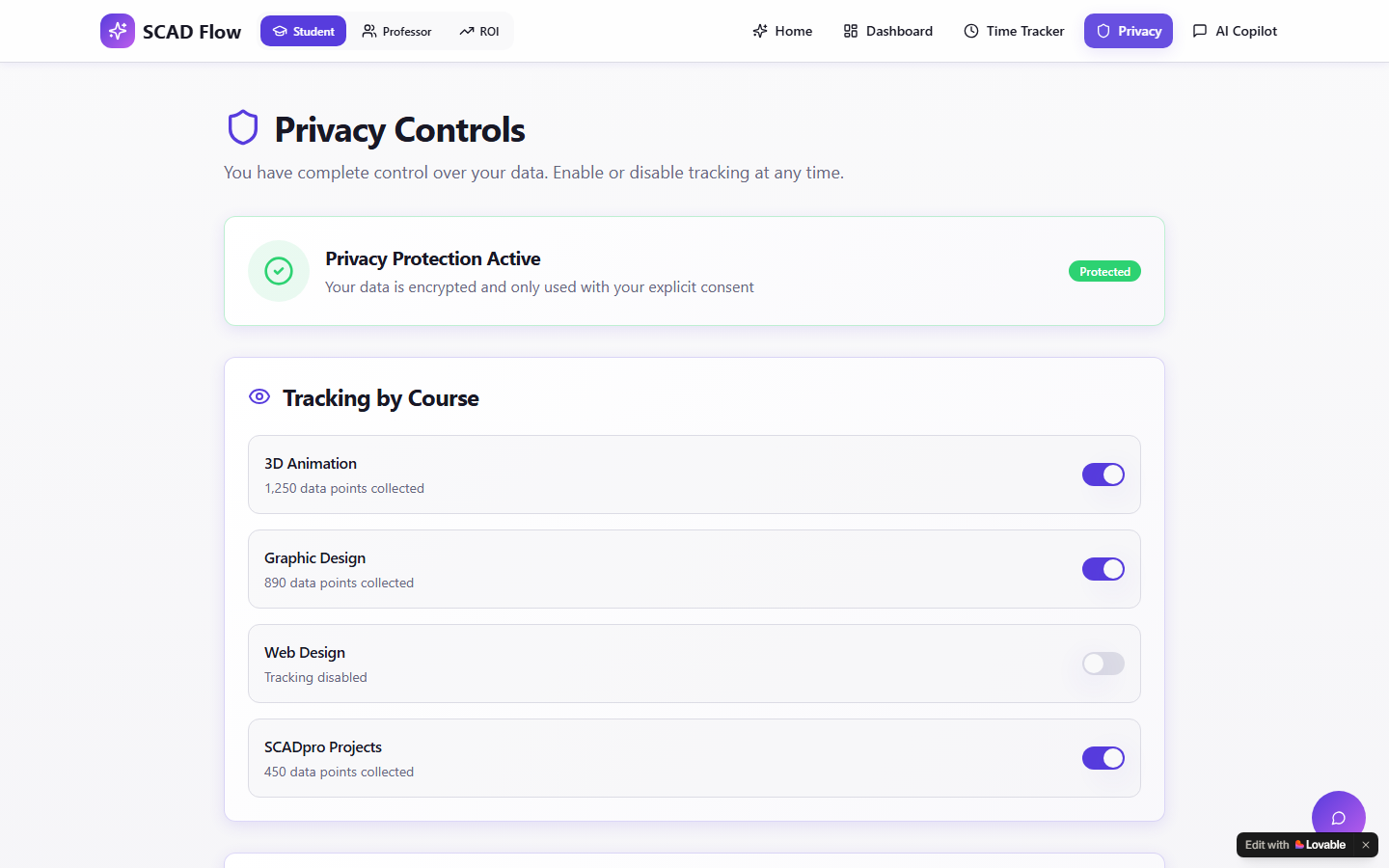
A context aware AI assistant inside SCAD's infrastructure.
The final deliverable is a working prototype of a context aware AI assistant that logs study hours, visualizes timelines, and automates habit tracking inside SCAD's existing digital infrastructure. Students get visibility into their own creative effort. SCAD gets a measurable picture of what its students are actually doing, and Microsoft got proof of what its sponsorship model can produce in a single day.
SCAD Flow's positioning landed at From Classroom to Client. The promise that the work students do as students is real, measurable, and worth more than the rubric gives it credit for.
SCAD Flow learns how creativity works, and proves how much it's worth.Product positioning
Microsoft 365 · Figma · Lovable (vibe coding) · ChatGPT